RoadAtthena | Managing IT Operations Through AI in Road Infrastructure
Insight
Managing IT Operations Through AI in Road Infrastructure
March 9, 2026
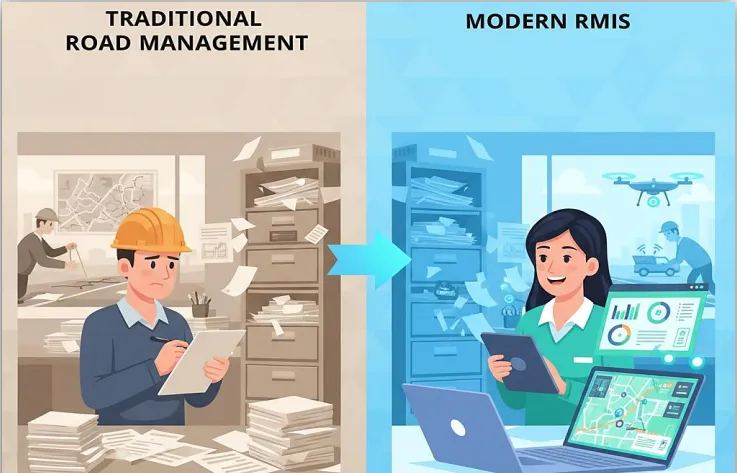
As urbanization accelerates and mobility demands continue to grow, road authorities must manage expanding infrastructure networks with greater efficiency, transparency, and accountability. Traditional road infrastructure systems often rely on manual verification processes, reactive maintenance cycles, and fragmented reporting mechanisms. These limitations not only increase operational costs but also restrict the ability to plan long-term infrastructure improvements effectively.
To address these challenges, modern road management systems are increasingly integrating Artificial Intelligence (AI) into IT operations. AI-driven platforms enable authorities to process large volumes of infrastructure data, automate validation processes, and gain predictive insights into asset performance. One such solution is RoadAthena, an advanced Road Asset Management System (RAMS) that combines GIS intelligence, computer vision, predictive analytics, and intelligent dashboards to transform infrastructure monitoring into a proactive and data-driven ecosystem.
AI-Driven Data Intelligence for Road Asset Management
Large-scale road infrastructure projects generate extensive datasets, including GIS centerlines, GPX survey tracks, high-resolution video recordings, asset inventories, pavement condition parameters, and ward-wise infrastructure reports. Managing and validating such volumes of structured and unstructured data requires robust automation and intelligent processing capabilities.
AI-driven IT operations enable automated data validation, anomaly detection, and scalable processing across multiple projects. Intelligent algorithms can identify duplicate road segments, validate alignment between GIS and GPX data, detect missing attributes, and flag corrupted survey uploads. These capabilities ensure higher data accuracy and compliance with regulatory guidelines while significantly reducing manual verification time.
By maintaining reliable and validated datasets, authorities gain a stronger foundation for informed infrastructure planning and operational decision-making.
Predictive Maintenance and Proactive Infrastructure Planning
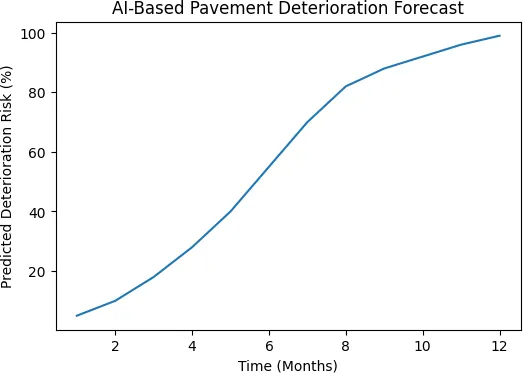
Predictive analytics plays a critical role in modern road asset management. Instead of relying solely on reactive maintenance after visible damage occurs, AI systems analyze historical infrastructure data to forecast potential deterioration risks.
By evaluating parameters such as pavement type, traffic load patterns, environmental exposure, and historical defect records, predictive models can estimate the probability and severity of infrastructure degradation. This enables authorities to identify high-risk road segments before failures occur.
Such predictive insights support smarter budget allocation, optimized maintenance scheduling, and extended asset lifecycle management. As a result, infrastructure governance shifts from reactive repairs toward preventive and strategic planning.
AI-Powered Asset Detection and Intelligent Decision Systems
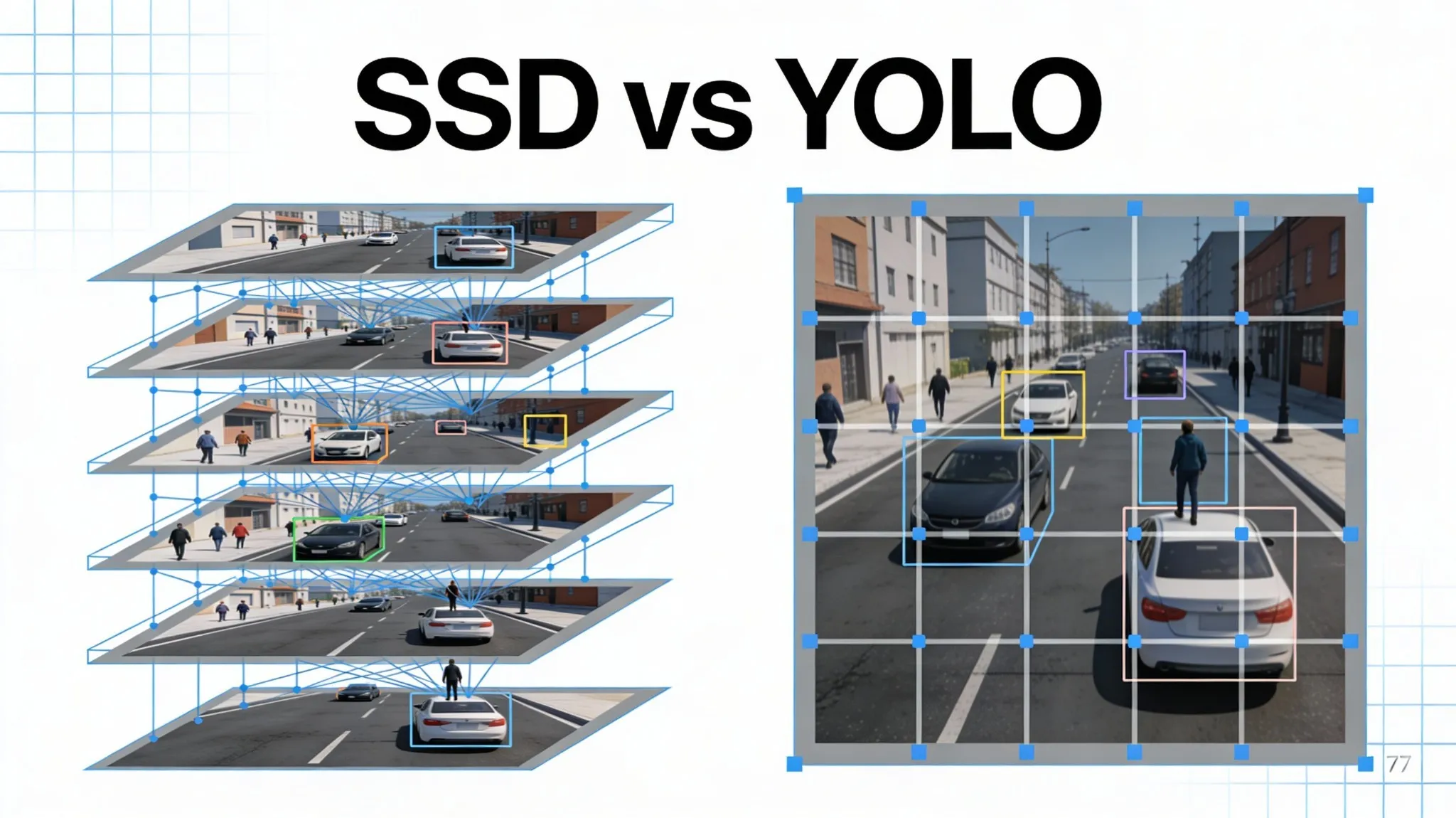
Advanced computer vision technologies further enhance the efficiency of infrastructure monitoring. AI models can automatically analyze survey videos and images to detect road assets such as traffic signboards, road markings, medians, guardrails, and other street infrastructure elements. The same systems can also identify pavement defects including cracks, potholes, and surface deterioration.
Automated detection significantly reduces the time required for manual video review while improving reporting consistency and accuracy.
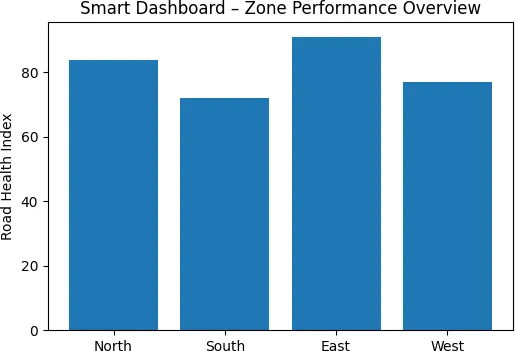
AI-powered dashboards convert these processed datasets into actionable insights for decision-makers. Authorities can monitor ward-wise infrastructure performance, track defect severity in real time, prioritize maintenance based on risk levels, and generate automated compliance reports. This intelligent decision-support system allows infrastructure teams to manage complex road networks more efficiently and transparently.
YOU MIGHT ALSO LIKE
SSD vs YOLO – A Friendly Guide to Object Detection