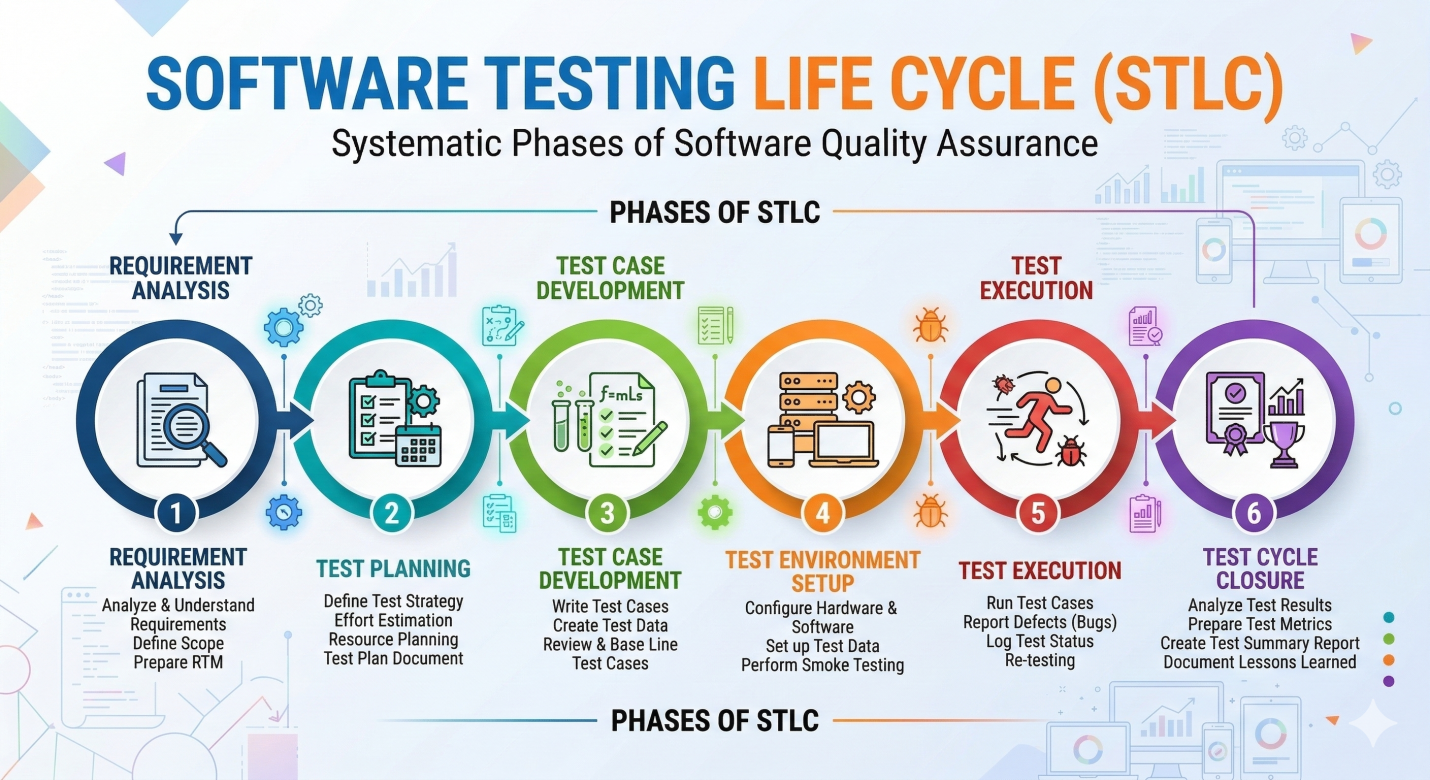
In today's fast-moving development world, QA is often misunderstood as a final checkpoint, a last-minute scan for errors before a product goes live. But that view sells it short. True Quality Analysis is a proactive mindset — one that is woven into every stage of the development journey, from the earliest conversations about an idea all the way through to the moment a finished product reaches the user. It is not about finding what went wrong after the fact. It is about making sure things are built right from the very beginning.
Good QA is also not a one-size-fits-all process. It brings together the strengths of both manual and automated testing, and the combination of the two is what makes it genuinely powerful. Manual testing brings the human element — the kind of careful, intuitive observation that picks up on usability issues, design inconsistencies, and real user experience problems that no automated script can fully replicate. Automated testing, on the other hand, is built for speed and consistency, handling repetitive checks quickly and accurately so nothing slips through the cracks over time. When these two approaches work hand in hand, teams are able to catch problems much earlier in the process — which not only saves time but also prevents the kind of expensive, last-minute fixes that can derail a project entirely.
At a deeper level, QA is really about protecting something that no business can afford to lose — the trust of its customers. When a product works the way it is supposed to, when it feels reliable and intuitive and consistent, users notice. And when it does not, they notice that too — often loudly, and at the worst possible moment. So at its core, Quality Analysis is not simply a process of finding what is broken. It is a commitment to delivering something that works, something that holds up under real-world conditions, and something that people can genuinely depend on every time they use it.