RoadAtthena | Reshaping of Project Lifecycles by AI: Impacts on Managerial Paradigms and Cross-Functional Team Dynamics
Insight
Reshaping of Project Lifecycles by AI: Impacts on Managerial Paradigms and Cross-Functional Team Dynamics
April 29, 2026
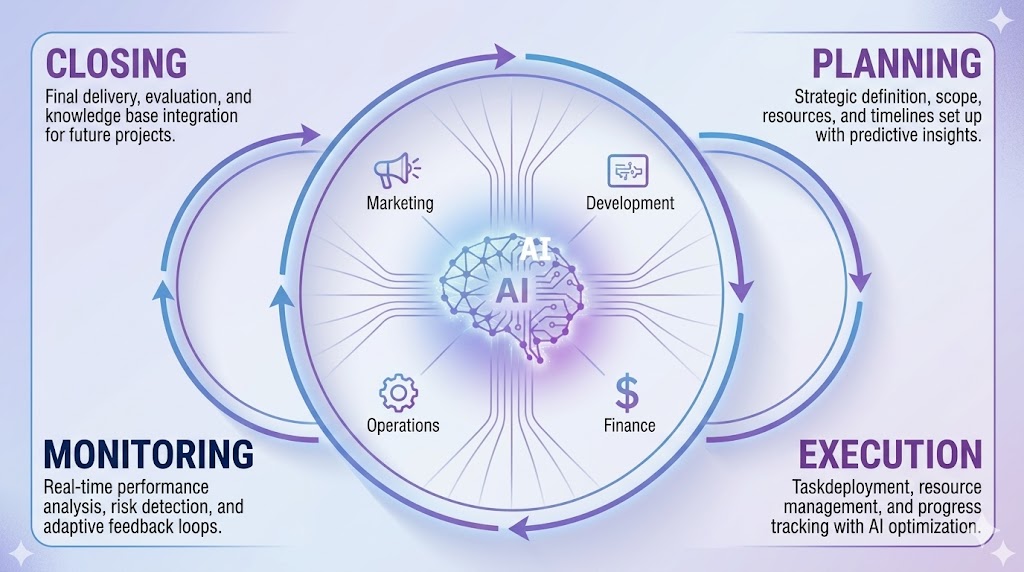
Artificial Intelligence (AI) is gradually changing the way projects are managed — and for those who have experienced the stress of keeping complex projects on track, that change is genuinely welcome. From the very first planning meeting to the final handover, AI is making each stage of the project lifecycle smoother, sharper, and a lot less overwhelming.
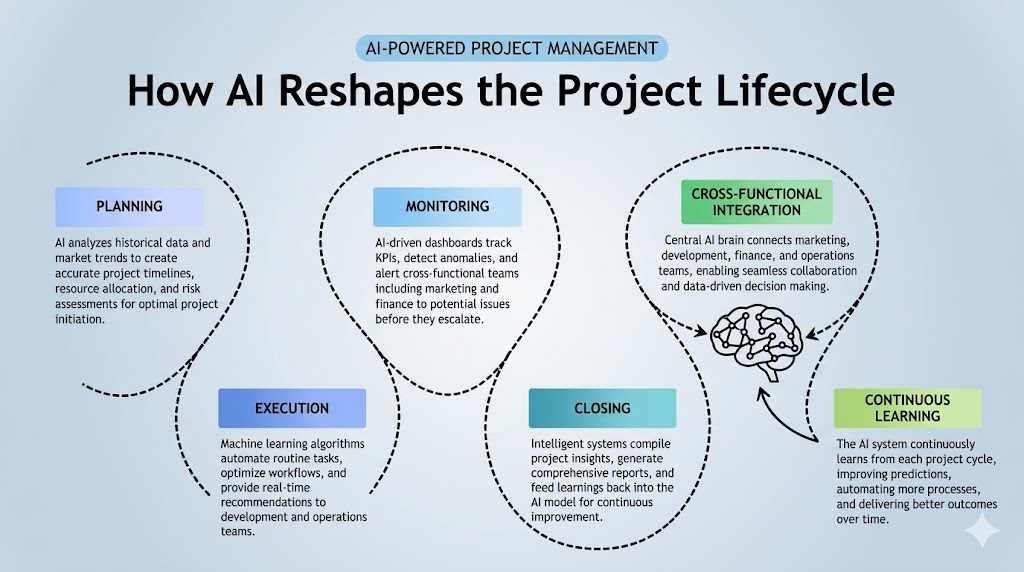
It starts right at the planning stage, where so many projects either set themselves up for success or quietly sow the seeds of future problems. Rather than relying purely on experience or instinct, AI can analyze data from previous projects to surface potential risks early, suggest timelines that are actually realistic, and help build budgets that hold up under pressure. It takes a lot of the guesswork out of the equation and gives project managers a much stronger foundation to build from.
Once a project moves into execution, AI continues to quietly do the heavy lifting in the background. It can assign tasks based on what each team member does best, keep resources balanced, and monitor progress in real time — all without the need for constant manual check-ins. What this means in practice is that teams spend less time on admin and more time on the work that actually moves the needle.
Monitoring a live project used to mean sifting through spreadsheets and waiting for status updates. With AI, managers get a clear, real-time picture of how things are progressing — what is on track, what is falling behind, and where attention is needed. Problems that might have gone unnoticed for days can now be caught early, giving teams the chance to course-correct before things escalate. One of the more underappreciated benefits of AI is how it brings different departments together. Whether it is marketing, development, or operations, everyone tends to work in their own bubble — with their own tools, their own updates, and their own version of the truth. AI-powered platforms break down those silos by creating a shared space where information flows freely and everyone stays aligned around the same goals. It makes cross-functional collaboration feel far less like a coordination exercise and far more like genuine teamwork.
Artificial Intelligence (AI) is changing the way projects are planned, executed, and managed — and the shift is happening faster than many organizations expected. For decades, project management leaned heavily on manual planning, human judgment, and periodic check-ins to keep things moving. While that approach worked, it also left a lot of room for error, delay, and missed opportunities. AI is stepping in to close those gaps in a way that feels less like a technological upgrade and more like a fundamental change in how work gets done. At the heart of this change is AI's ability to turn data into decisions. During the planning stage, rather than relying solely on past experience or best guesses, project managers can now draw on AI tools that analyze large volumes of historical and real-time data. These tools can flag potential risks before they materialize, build more accurate timelines, and suggest how resources should be allocated for the best possible outcome. The result is a much stronger starting point — one where strategies are grounded in evidence rather than assumption.
Once a project is underway, AI continues to add value by handling the kind of routine, time-consuming work that used to pull managers away from bigger priorities. Task tracking, progress monitoring, and schedule adjustments can all be managed automatically, with AI systems continuously scanning project data and surfacing insights as situations evolve. When something unexpected comes up — and it always does — teams are in a far better position to respond quickly and decisively rather than scrambling to catch up. Collaboration across departments has long been one of the trickier aspects of project management. Marketing, development, finance, and operations all bring different priorities, different tools, and different ways of communicating. AI-driven platforms are helping bridge those gaps by providing shared dashboards and transparent communication channels that give every department a common view of the project. When everyone is working from the same information, alignment comes more naturally and friction tends to fade.